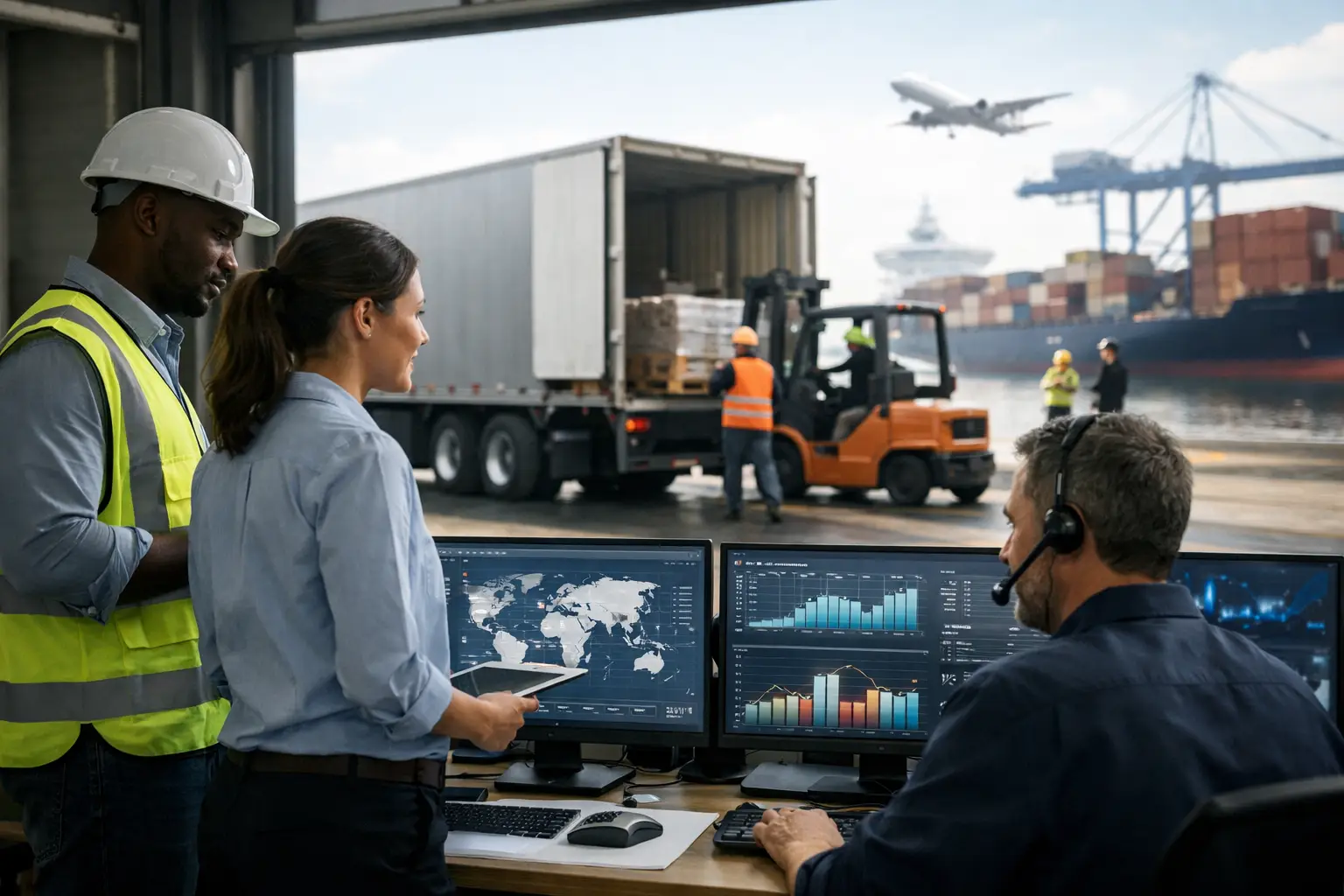
A production line waiting on an inbound load, a dock schedule that no longer matches actual arrival times, and a contracted carrier that cannot cover a lane are not separate problems. They are one operating problem: transportation decisions made too slowly, with incomplete information. The supply chain resilience trends that matter most are changing how shippers prevent these moments from turning into expensive service failures.
Resilience is not about paying more for excess capacity or building a larger carrier list that no one actively manages. It is the ability to make a controlled decision when conditions change: select the right procurement option, confirm the shipment can execute, protect dock capacity, keep stakeholders informed, and validate the final charge. For transportation leaders, that requires a connected operating model rather than another dashboard.
Supply chain resilience trends are moving beyond backup plans
For years, resilience was often treated as contingency planning. Keep a few alternate carriers available. Maintain more inventory. Escalate when a critical shipment misses its appointment. Those measures still have a place, but they are not enough when freight networks change by the hour.
The current shift is toward operational resilience built into daily workflows. Shippers are connecting sourcing, booking, execution, tracking, dock coordination, carrier communication, and freight audit so that exceptions can be handled in the same environment as planned freight. This matters because most transportation disruption does not begin as a major crisis. It begins as a late tender response, a missed pickup window, an appointment mismatch, or a rate that does not match what was agreed.
The goal is not to eliminate every exception. That is unrealistic across complex multi-carrier networks. The goal is to identify the exception early, understand its cost and service impact, and move freight through the best available option before operations start improvising through email, spreadsheets, and disconnected carrier portals.
Hybrid freight procurement is becoming a control point
One of the clearest trends is the move away from treating contracted freight and spot freight as separate processes. A contract remains the foundation for predictable volume and strategic carrier relationships. But contracted capacity is not unlimited, and urgent moves do not wait for annual bid cycles.
Resilient shippers are building procurement workflows that evaluate contracted rates, pre-negotiated spot options, and live market bids in context. The right choice depends on lane requirements, pickup timing, equipment, carrier performance, accessorial exposure, and the cost of a delayed shipment. A low line-haul rate is not necessarily the lowest-cost decision if it creates missed production, detention, or a failed customer commitment.
This is where procurement discipline matters. Teams need clear routing rules, approval thresholds, and a record of why an alternate option was selected. Without that structure, spot buying can become reactive and difficult to control. With it, the organization can use the market when needed without losing rate governance.
Carrier optionality needs active management
Adding carriers alone does not create resilience. Each additional carrier requires qualification, communication standards, performance measurement, and a practical role in the network. If carrier data sits in separate files and performance reviews happen weeks after the freight moves, teams are managing history rather than execution.
The more useful approach is to make carrier capacity and performance visible at the point of decision. Can the carrier accept the load? Have they met pickup and delivery commitments on comparable moves? Are required documents and status updates arriving on time? These questions should shape routing decisions before a shipment becomes urgent.
Visibility is shifting from location data to operational action
A map showing truck positions can be useful, but it does not by itself protect service. Transportation teams need visibility that connects shipment status to the next decision. If an inbound load is running late, the relevant question is whether the dock appointment can be adjusted, whether downstream production is exposed, and who needs to act now.
That is why shipment visibility is increasingly tied to dock and yard operations. Plants and warehouses cannot absorb unlimited early arrivals, late arrivals, or unscheduled vehicles. When transportation and facility teams operate from different schedules, the result is congestion, wait time, and unnecessary manual coordination.
A resilient workflow brings these activities together. Arrival estimates inform appointment planning. Appointment changes are visible to carriers. Yard status helps teams prioritize unloading. Exceptions trigger ownership rather than sitting in an inbox. This does not mean every facility needs the same workflow. A high-volume plant with strict appointment rules needs a different setup than a distribution center managing variable outbound loads. But both need a reliable connection between transport execution and site capacity.
Data quality is now a resilience requirement
Many organizations have plenty of freight data but limited confidence in it. Rates are stored in one place, carrier updates in another, proof-of-delivery documents in another, and invoices arrive after the operations team has moved on. That fragmentation makes it difficult to identify recurring issues or verify whether the transportation plan delivered the expected result.
Resilient teams are treating data quality as an operating requirement. They standardize shipment references, locations, equipment types, accessorial rules, carrier identifiers, and status events. They also establish ownership for correcting bad data before it spreads through reporting and invoicing.
This is not a glamorous project, but it has a direct commercial payoff. Clean data improves tender decisions, makes exception reporting credible, speeds invoice validation, and gives procurement leaders a factual basis for carrier conversations. It also reduces the time teams spend reconciling basic details across systems.
Financial control belongs in the transportation workflow
Freight resilience has a finance dimension. A shipment may be delivered successfully but still create margin pressure through unexpected accessorials, duplicate charges, or rates that do not align with the approved booking. If invoice validation happens outside the execution workflow, the team must reconstruct the shipment after the fact.
Bringing financial controls closer to the shipment record creates better accountability. The agreed rate, selected service, status history, documents, and invoice can be reviewed as one transaction. Exceptions can be routed to the appropriate owner while details are still available. For finance stakeholders, this means fewer avoidable disputes and clearer accrual visibility. For transportation managers, it means the true cost of execution feeds back into future procurement decisions.
Supply chain resilience trends favor connected decision-making
The strongest resilience programs do not require teams to abandon their existing enterprise systems. They require transportation data and workflows to move reliably between them. Open integrations are becoming more valuable because no single application owns every part of the supply chain.
The practical test is simple: can a planner act on the information without rekeying it, chasing confirmation, or waiting for a separate team to update a record? When order data, shipment milestones, dock appointments, documents, and cost data can pass between connected systems, teams spend less time maintaining handoffs and more time managing outcomes.
This is also where implementation choices matter. Large transformation projects can create value, but they can take time and demand significant internal resources. A focused transportation deployment can often start with priority lanes, facilities, or exception-heavy flows, prove the workflow, and expand from there. The right pace depends on network complexity, data readiness, and the level of process standardization already in place.
What leaders should measure now
Cost per shipment remains essential, but it is too narrow to measure resilience. A network can show acceptable average freight cost while repeatedly absorbing late pickups, manual expedites, poor tender acceptance, dock delays, and invoice exceptions.
Transportation leaders should measure service and control alongside cost. Tender acceptance by lane, time to resolve exceptions, shipment status compliance, appointment adherence, carrier performance, spot usage by reason, and invoice exception rates reveal whether the network can respond under pressure. The point is not to create a larger scorecard. It is to select measures that lead to a decision: adjust routing rules, address carrier performance, redesign appointment capacity, or revise a lane strategy.
Easy4Pro supports this approach by bringing freight procurement, execution, visibility, dock and yard coordination, financial validation, and business intelligence into one operating environment. That connected structure helps teams manage planned freight and urgent exceptions without creating separate processes for each.
The transportation organizations that gain ground will not be the ones with the most contingency documents. They will be the ones that make faster, traceable decisions with the data already moving through their freight network. Start with the handoff that creates the most daily friction, connect the decision to execution and cost, and make that workflow dependable before expanding further.