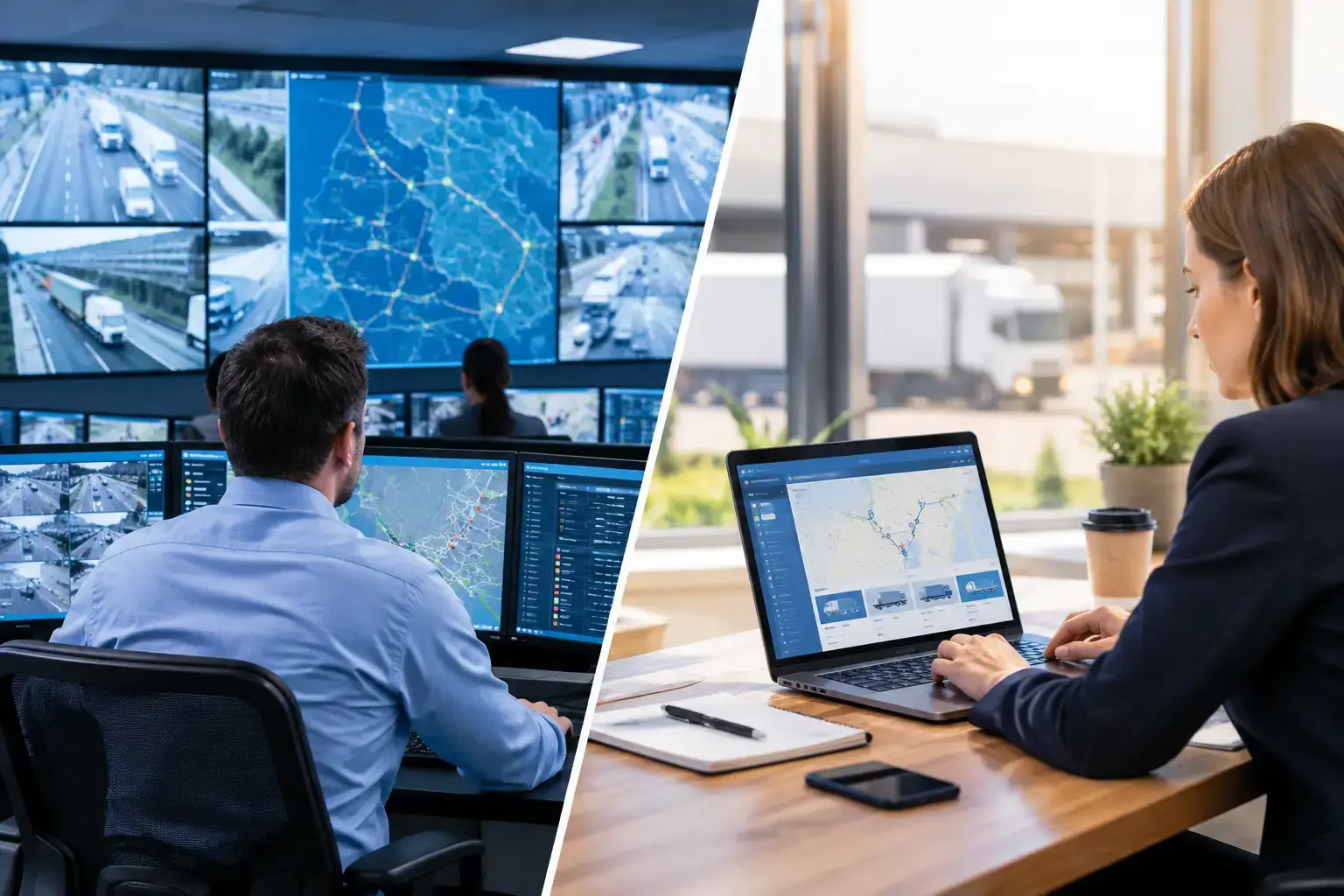
A late inbound shipment is not just a visibility problem. It can disrupt dock appointments, force a premium freight decision, create production risk, and trigger an invoice dispute days later. That is why the transportation control tower vs TMS question matters: logistics leaders need to know whether they are buying a clearer view of disruption, a system to control the response, or both.
The distinction is often blurred in vendor language. A transportation control tower can provide valuable network insight, while a transportation management system can manage the daily transactions that move freight. But visibility without execution leaves teams chasing emails and carrier portals. Execution without timely, connected data can limit how quickly teams respond when plans change.
For shippers managing contracted freight, recurring spot demand, and urgent exceptions across multiple plants and warehouses, the right operating model must connect decision-making to action. It should help the team source capacity, tender loads, coordinate facilities, track performance, validate charges, and understand what happened financially.
What a transportation control tower does
A transportation control tower is an operational command layer. Its primary job is to collect data from across the freight network, identify exceptions, and help teams prioritize action. Depending on its design, it may combine shipment status, carrier events, dock capacity, order data, inventory signals, and customer requirements into a central view.
The control tower model is especially useful when the network is complex. A logistics director may need to see which delayed inbound loads affect a production schedule, which outbound loads risk missing a delivery commitment, and which facilities are approaching capacity. Instead of searching across spreadsheets, emails, and separate portals, the team can work from a shared operating picture.
The value is not the dashboard alone. It is the ability to detect a meaningful exception early, assign ownership, and coordinate the response. A well-run control tower creates discipline around exception management: which shipments require intervention, who owns the next step, and whether the resolution protected service and cost.
Yet a control tower does not automatically execute transportation work. Some are primarily analytics and visibility environments. Others are managed operational services supported by people, processes, and software. In either case, the key question is whether the tower can turn an alert into a booking, tender, reroute, dock change, or financial correction without forcing the team back into disconnected systems.
What a TMS does
A transportation management system is the execution engine for freight operations. It manages the workflow from procurement through payment: selecting a carrier and service, creating shipments, tendering freight, tracking execution, handling documents, auditing charges, and supporting payment processes.
For a transportation manager, this is where daily control happens. A TMS applies contracted rates and business rules, manages carrier communication, records shipment milestones, and gives the operation a consistent record of what was planned, booked, moved, delivered, and billed. It replaces manual handoffs with repeatable workflows.
A capable TMS also gives procurement and finance teams a stronger operating foundation. Procurement can compare contracted, pre-negotiated, and live options when capacity or service requirements shift. Finance can validate invoices against agreed rates, accessorial rules, and shipment data rather than reconcile costs after the fact. Leadership can analyze carrier performance, lane costs, tender outcomes, and exception patterns using the same underlying data.
Not every TMS has the same depth. Some focus heavily on planning and tendering. Others are stronger in freight audit, visibility, carrier collaboration, or network analytics. The practical requirement is not a long feature checklist. It is whether the platform supports the real decisions your team makes when planned transportation meets operational reality.
Transportation control tower vs TMS: the practical difference
The simplest distinction is this: a control tower tells the operation where attention is needed; a TMS gives the operation the transactional control to act.
A control tower typically starts with cross-network awareness. It asks questions such as: Which loads are at risk? Which plant will be affected? Where is carrier performance declining? Which disruption has the highest operational impact? Its strength is prioritization across a broad set of events and stakeholders.
A TMS typically starts with transportation execution. It asks: What is the best available option for this shipment? Has the carrier accepted the tender? Is the shipment on schedule? Does the invoice match the agreed transportation terms? Its strength is turning policy, rates, and operating rules into daily actions.
The dividing line is not always clean. A modern TMS can include control-tower capabilities such as live visibility, exception alerts, operational dashboards, and collaborative workflows. Likewise, a control tower can initiate certain actions through integrations. The real issue is where the source of truth sits and how many manual steps remain between detecting a problem and resolving it.
If a delayed shipment alert still requires an operator to search for rates, call carriers, update a spreadsheet, alter a dock schedule in another tool, and later explain the extra cost to finance, the organization has visibility but not an integrated response. If a TMS can identify the delay, compare available capacity, rebook the shipment, update stakeholders, and retain the financial record, it functions as both an execution platform and an operational control layer.
When a control tower is the right priority
A control tower can be the right first move when an organization already has several established execution systems but lacks a coordinated network view. This is common in large, decentralized operations where different regions, business units, or facilities use separate transportation processes.
It can also be appropriate when the immediate business need is strategic coordination. For example, leaders may need to monitor supplier disruption, inbound material risk, or customer-service exposure across modes and geographies before changing underlying execution tools. In that case, a control tower can create a shared decision environment while the organization defines its long-term systems roadmap.
There are trade-offs. A separate tower requires dependable data connections and clear operational ownership. If shipment milestones arrive late, rate data is inconsistent, or no team has authority to act on alerts, the tower can become a reporting layer rather than an operating advantage. The organization needs agreed escalation rules, not just better screens.
When a TMS should come first
A TMS should be the priority when transportation work is still fragmented across emails, spreadsheets, carrier portals, and manual invoice checks. These are not minor process issues. They make it harder to enforce procurement strategy, respond consistently to exceptions, and understand the full cost of a shipment.
For many mid-market and enterprise shippers, the most urgent need is to unify the day-to-day workflow. The platform should manage planned freight and urgent demand in the same environment, rather than force teams to use one process for contracted lanes and another for spot shipments. That matters when a rejected tender or production change requires a fast capacity decision.
A TMS is also a stronger starting point when cost control is central to the business case. With connected procurement, execution, and invoice validation, teams can compare options before booking and check charges against the shipment record afterward. The savings opportunity comes from better decisions and tighter process control, not from visibility alone.
Easy4Pro is designed around this connected workflow, bringing contracted freight, pre-negotiated spot options, and on-demand spot procurement into one operating environment. The objective is straightforward: give transportation, procurement, operations, and finance teams one shared process from sourcing through payment.
Build for action, not another layer
The strongest answer is often not transportation control tower or TMS. It is a TMS that provides control-tower-level visibility while retaining the ability to execute. That approach reduces system handoffs and gives the people managing freight a direct path from exception to resolution.
Before selecting a model, examine a recent disruption. Trace what happened from the first missed milestone through final invoice approval. How many systems did the team use? How many people needed to intervene? Could they compare available transportation options immediately? Did the dock team, carrier, transportation manager, and finance team work from the same facts?
Those answers reveal the real gap. If the operation cannot see risk, improve visibility and exception management. If it can see risk but cannot respond without manual work, prioritize integrated execution. If both gaps exist, avoid building another disconnected layer. Choose an operating model that gives your team the information to decide and the tools to act while the shipment still matters.